



Floods Expose Kenya’s Infrastructure Crisis
Seasonal floods in Kenya are exposing critical infrastructure and planning failures. Discover how poor drainage, rapid urbanization, and weak systems are worsening flood impacts.

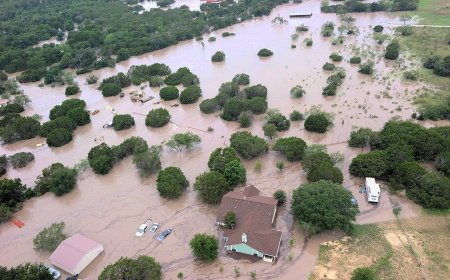
Every rainy season in Kenya tells the same story, but each year the consequences grow heavier and harder to ignore. Roads disappear under water, estates turn into temporary lakes, businesses shut down, and families are displaced overnight. What appears on the surface as a natural disaster is, in reality, something far more revealing. Floods are not just caused by rain; they are exposing deep structural flaws in how cities are planned, built, and managed.
When water overwhelms a road, it is not merely because of heavy rainfall. It is often because drainage systems were either poorly designed, inadequately maintained, or completely ignored during construction. In many urban and peri-urban areas, development has moved faster than planning. Buildings rise where water naturally flows, and roads are constructed without sufficient consideration for stormwater management. The result is predictable: when the rains come, the system fails.
One of the most visible problems is drainage. In many estates, drainage channels are either too narrow, blocked by debris, or nonexistent. Plastic waste, soil, and uncollected garbage clog waterways, turning what should be a controlled flow into chaotic flooding. This is not just a sanitation issue; it is a structural failure. A city that cannot manage its waste cannot manage its water. The two are deeply connected, and when one breaks down, the other follows.
Urban expansion has also played a significant role. As cities like Nairobi continue to grow outward, land that was once open and absorbent is now covered with concrete. Natural drainage systems such as wetlands and rivers are encroached upon or redirected without proper engineering. Water that once soaked into the ground now has nowhere to go except into homes, streets, and businesses. This is not simply poor planning; it is a misunderstanding of how cities interact with nature.
In informal and rapidly developing areas, the problem becomes even more severe. Structures are often built without adherence to building codes, and access roads are created without proper grading or drainage systems. During heavy rains, these areas become highly vulnerable, with water moving unpredictably and causing damage that could have been prevented with basic planning and enforcement. The cost of this failure is paid not just in property damage, but in disrupted livelihoods and increased risk to human life.
Even in more established neighborhoods, the cracks are showing. Roads that were designed years ago for lower traffic and smaller populations are now under immense pressure. Drainage systems built decades ago are no longer sufficient for current urban density. Maintenance, which should be continuous, is often reactive. By the time action is taken, the damage has already occurred.
Flooding also reveals a deeper issue of accountability. Infrastructure is not just about construction; it is about long-term management. When systems fail repeatedly, it raises questions about planning standards, enforcement of regulations, and the prioritization of public investment. It is not enough to build quickly; it is necessary to build wisely. Otherwise, every rainy season becomes a test that the system continues to fail.
There is also an economic dimension that cannot be ignored. Businesses lose revenue when roads are impassable. Transport costs increase, supply chains are disrupted, and productivity declines. For individuals, especially those in vulnerable areas, floods can wipe out years of progress in a single night. This is not just an environmental issue; it is a development issue that directly affects economic stability and growth.
What makes the situation more urgent is that these floods are not unpredictable. Rainy seasons come with patterns that are well understood. The recurring damage is not due to a lack of information, but a lack of preparation and execution. The same areas flood year after year, the same roads become impassable, and the same complaints are raised. This repetition is a clear signal that the problem is not temporary; it is systemic.
Yet within this challenge lies an opportunity. Floods, as destructive as they are, provide clear feedback. They show exactly where systems are failing and where interventions are needed. They highlight weaknesses in urban planning, gaps in infrastructure, and failures in maintenance. If taken seriously, these signals can guide better decision-making and more resilient development.
The path forward requires a shift in mindset. Infrastructure should not be treated as a one-time project, but as a living system that requires continuous investment and oversight. Urban planning must consider not just immediate needs, but long-term sustainability. Waste management, drainage, and land use must be integrated, not treated as separate issues. Most importantly, enforcement of standards must be consistent, not optional.
Floods are not just water; they are a mirror. They reflect the quality of planning, the discipline of execution, and the seriousness with which systems are managed. Each rainy season is not only a challenge, but also a revelation. It shows what has been ignored, what has been neglected, and what must change.
Ignoring these signals comes at a cost that continues to rise. Addressing them, however, offers a chance to build cities that are not only growing, but enduring. The difference lies not in the rain, but in the response.